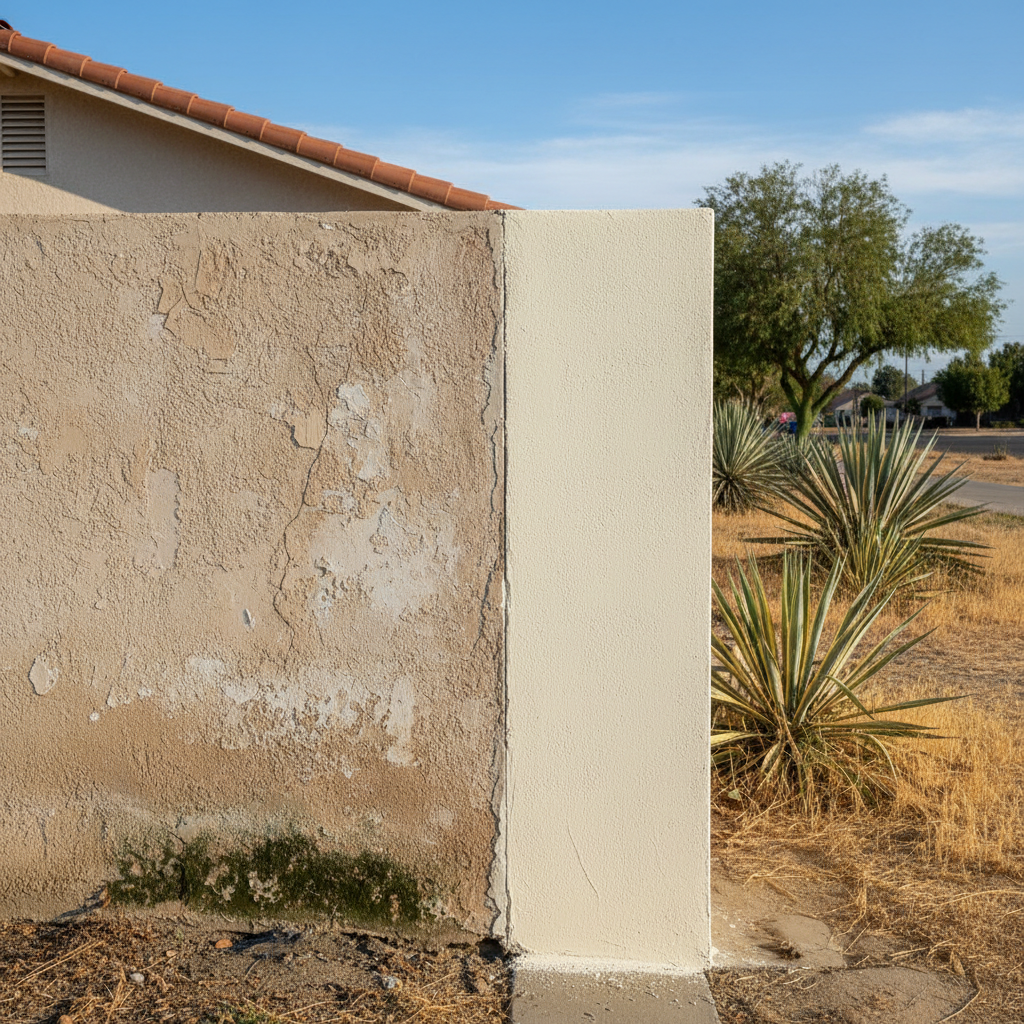
So, you're thinking about stucco for your commercial building right here in San Bernardino? Smart move. It's tough, looks good, and honestly, it handles our desert climate pretty well. But once you start looking into it, you'll quickly find two main types: traditional stucco and EIFS (that's Exterior Insulation and Finish Systems). What's the real scoop, and which one makes more sense for your business?
What's the Deal with Traditional Stucco?
Traditional stucco, sometimes people call it hard coat stucco, is probably what pops into most folks' heads when they hear the word "stucco." It's been around for ages, and there's a good reason for that. It's basically a mix of cement, lime, sand, and water, applied in layers over a wire lath. This lath usually gets stapled onto a weather-resistant barrier, which then attaches to your building's sheathing. You'll typically see three coats: first a scratch coat, then a brown coat, and finally the finish coat that gives it its color and texture.
The big thing with traditional stucco? Its hardness and how it breathes. It's a really solid, rigid surface. If you tap on it, it feels like concrete—because, well, it pretty much is. It's also permeable, meaning it can soak up and then release moisture. That's a huge plus, especially with our occasional downpours followed by that intense heat. It lets the wall dry out naturally, you know?
Then There's EIFS: The Newer Kid on the Block
EIFS works a little differently. It's a multi-layered system that kicks off with an insulation board – usually expanded polystyrene (EPS), which is basically just rigid foam. This board gets attached to your wall, and then a base coat, made from polymer-modified cement, goes over it. They embed a fiberglass mesh in there for extra strength. Finally, a finish coat, pretty similar to traditional stucco's top layer, gets applied. This finish coat is usually acrylic-based, making it more flexible and less likely to crack.
The key takeaway here is 'insulation.' EIFS is specifically designed to be an insulating barrier on the outside of your building. Picture it like wrapping your whole structure in a big, cozy blanket – great for keeping things warm, or, in our case, nice and cool. It's a complete system, not just something you put on the surface.
Cost: What's It Going to Set You Back?
Let's talk money, because that's always a big deal for business owners. Generally speaking, traditional stucco tends to cost a bit less to put in upfront. The materials are simpler, and even though it takes a lot of labor, the whole system isn't as complex as EIFS. You're mostly looking at stuff like cement, sand, and lime, which are pretty standard.
EIFS, on the other hand, usually has a higher initial price tag. You're paying for specialized insulation boards, those polymer-modified cements, and acrylic finishes. The installation also needs a bit more exactness to make sure the system holds up, especially around openings like windows and doors, so that thermal envelope stays intact. But, that higher upfront cost can sometimes get balanced out by energy savings down the road, which brings us to...
Durability and Maintenance: How Long Will It Hold Up?
Both are tough, but in their own ways. Traditional stucco is incredibly durable against physical hits. You smack it with something, and it's less likely to dent or get a hole in it. It can, however, crack over time because of building movement, seismic activity (and we definitely know about that here in California), or just settling. Those cracks can let water in if you don't take care of them.
EIFS is more flexible. That acrylic finish and the foam board underneath mean it's less likely to crack from minor building shifts. It's also really good at keeping water out, as long as it's installed correctly. But, because of that foam core, it's more prone to impact damage. A hard hit can dent or puncture it, and that can mess with the system's water resistance. Fixing EIFS often needs a bit more specialized know-how to make sure those layers are sealed up right again.
Maintenance for both usually means keeping them clean and checking for cracks or damage. For traditional stucco, you're mostly patching cracks and repainting if the color starts to fade. With EIFS, you're looking for punctures or spots where the sealant might have failed. Both can get mold or mildew if they stay wet too long, especially on the north-facing walls of buildings in places like the foothills where it stays shadier.
Appearance: What Kind of Vibe Are You Going For?
Looks-wise, both can give you a huge variety of styles. Traditional stucco often delivers that classic, earthy, Mediterranean feel. You can get all sorts of textures, from super smooth to quite rough, and it's easy to paint any color you want. It just has this timeless appeal.
EIFS also offers a massive range of textures and colors. Since the finish coat is acrylic, the colors tend to be more vibrant and can hold up longer without fading. Plus, because of the insulation board, EIFS can be easily shaped and sculpted to create architectural details like cornices, arches, and custom designs that would be much harder – and way more expensive – to pull off with traditional stucco. If you're after a really modern, sleek look with crisp lines or intricate details, EIFS often makes that a lot easier to achieve.
My Recommendation for San Bernardino Businesses
Alright, so which one should you pick for your commercial property here in San Bernardino? Here's my honest take. For most commercial buildings in our area, especially those that want long-term energy efficiency and a bit more design freedom, EIFS is often the better choice. The insulation factor is a huge plus in our hot summers and surprisingly cool winters. Those energy savings can really add up over the years for a business, wouldn't you say?
However, you absolutely, positively have to make sure it's installed by someone who knows their stuff. Proper flashing around windows and doors, and correct sealing, are non-negotiable with EIFS. If it's not done right, you can end up with water getting in. That's where a reputable company like San Bernardino Stucco & Plastering really shines. We've seen the good, the bad, and the downright ugly of both systems.
If you're on a tighter budget, or if you're aiming for a very traditional, rustic look, and you're diligent about maintenance, traditional stucco is still a solid, reliable option. It's proven, it's tough, and it breathes well. Just be ready for those occasional crack repairs, especially with our expansive clay soils here in the valley that can cause foundations to shift a bit over time.
Ultimately, it boils down to what's most important to you: your budget, how much you care about energy efficiency, your aesthetic goals, and how much maintenance you're willing to do. Both are good products when installed correctly. Just make sure you're working with pros who really get the nuances of each system and how they perform in our specific climate. Don't just pick the cheapest bid; pick the one that gives you confidence.